

Based on the story of Omirserik Ibragimov, a fisherman in the village of Tastubek on the Kazakh side of the Aral Sea, as reported by NPR in 2024
Omirserik Ibragimov was born in 1993, the year the Aral Sea effectively died. He grew up without ever seeing the water his father spoke about in stories. As a boy, his playground was the abandoned fishing boats scattered across the dried seabed—rusting hulks that seemed like relics from another world.
«I was born in 1993, and when I was born, the sea was already gone,»
Ibragimov recalls from his home in Tastubek, a small fishing village on the Kazakh side of what was once the world’s fourth-largest lake
When Ibragimov was ten years old, something extraordinary happened. Kazakhstan completed construction of the Kokaral Dam—a 13-kilometer concrete barrier designed to prevent the Syr Darya River from draining into the southern desert. The water began returning to the North Aral Sea. As the water rose, Ibragimov’s father taught him how to fish for the first time.
«So in one, two years after building the dam, the water salinity dropped down,»
he remembers .
For nearly two decades, the revival seemed like a miracle. Fishermen who had abandoned their trade returned to the water. The village of Tastubek, which had nearly died out in the 1990s with only seven or eight families remaining, slowly came back to life . People who had left for cities returned, hoping to survive by fishing.
But today, Ibragimov’s hope is tinged with worry. In recent years, the sea has begun receding again.
«In the last two years, the sea receded about 200 meters from the coastline. It’s becoming lower and lower, and I think that it’s the main reason why we have less fish now in the Aral Sea, because there is less water,» he says
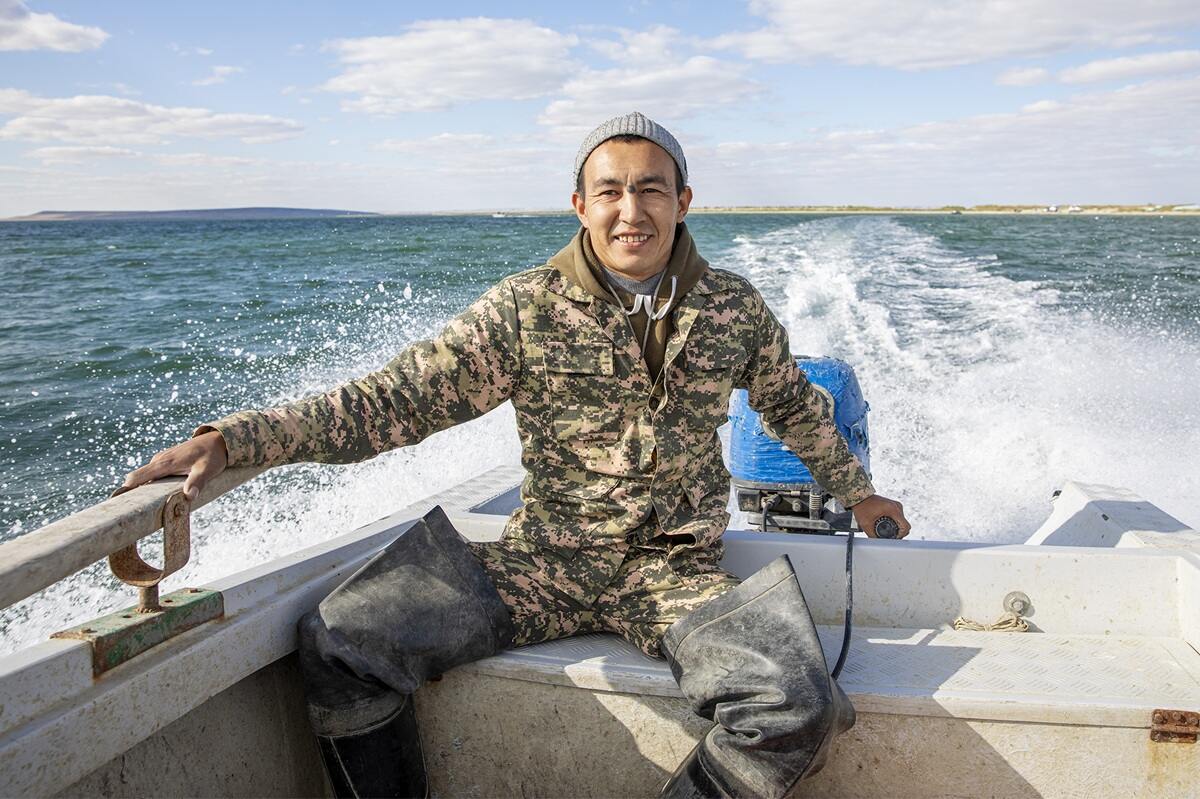
The reasons are complex. The Kokaral Dam, while successful, is too low—water spills over it and evaporates . Upstream, the Syr Darya River faces increasing demands from agriculture, particularly rice production in the Kyzylorda region. And beyond human management lies a deeper threat: the glaciers of the Tien Shan mountains, which feed the river, are shrinking due to global warming .
For Ibragimov and the other fishermen of Tastubek—about 120 people who now live in the village—the sea is not just a resource. It is identity, heritage, and the only livelihood they know. «If it will continue shrinking or there will be less water or salty and if you lose the fish in the Aral Sea, that will be the biggest problem, tragedy for the villagers,» Ibragimov says.
When you travel to the Kazakh side of the Aral Sea with aidala.kz, you meet people like Omirserik Ibragimov. You see the water that returned against all odds. And you understand that this story is not over—it is still being written, day by day, by the fishermen who refuse to let their sea disappear.